Scientific Principles Behind the Excellent Heat Transfer Capability of Thin-Film Dryers
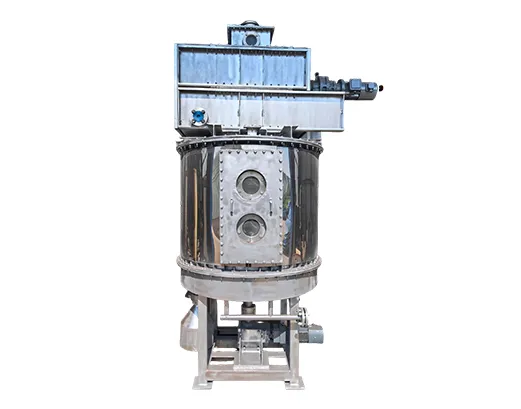
The working principle of thin-film dryers is simple yet ingenious. It spreads the material into a thin film over a heated surface. This design maximizes the contact between the material and the heat source, enabling fast and uniform heat transfer. As a result, drying times are shorter and energy consumption is lower. Traditional dryers hold material in thick pools, which leads to uneven heating: some areas are overheated, while others remain cold. This not only wastes energy but also results in uneven drying quality. Thin-film dryers completely eliminate this issue. Their scrapers continuously refresh the material surface, ensuring that fresh material is consistently exposed to the heat source. This ongoing renewal effectively prevents the formation of insulating layers, allowing heat to act directly where it is most needed. At the same time, the thin-film form allows liquids to evaporate quickly, with water or solvents escaping rapidly, significantly reducing drying time. The scientific principle behind this design lies in its simplicity, achieving a level of thermal energy utilization that other systems cannot match.
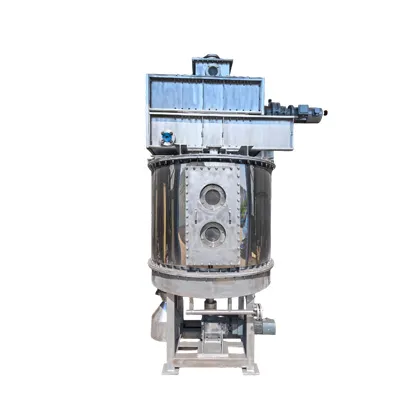
Innovative Thin-Film Dryer Design for Gentle Material Processing
In many industries, the preservation of materials is critical, and high temperatures can damage valuable components. Traditional dryers require prolonged exposure to high temperatures, and such thermal stress not only degrades product quality but also reduces yield. Thin film dryer technology directly addresses this challenge through an innovative design that creates an unexpectedly gentle drying environment. The key lies in the controlled heating time of the material and the immediate removal of evaporated components. These dryers operate under vacuum conditions. A vacuum environment lowers the boiling point of liquids, which in turn reduces the operating temperature. Substances that would degrade at 100°C can be perfectly processed at just 40°C under vacuum. The thin-film design perfectly supports this principle: the material comes into contact with the heated surface only briefly, after which it is scraped off, completing the heating process before any damage can occur. This intermittent heating method effectively prevents heat accumulation. Each particle receives exactly the precise amount of heat it needs — no more, no less.
Environmental Benefits of Applying Thin-Film Dryer Systems
Industrial drying processes often bring serious environmental challenges. High energy consumption is only the beginning. Many traditional dryers emit volatile organic compounds into the atmosphere, produce large amounts of wastewater that require treatment, and generate vast amounts of wasted heat. Thin-film dryer systems offer a cleaner alternative, with environmental benefits that are both multifaceted and substantial. Improved energy efficiency is their most notable advantage. Due to their high heat utilization rate, thin-film dryers consume significantly less electricity or steam. Lower energy demand means a smaller carbon footprint. Some factories report energy consumption reductions of up to 70%. This directly translates into reduced greenhouse gas emissions. Additionally, their vacuum operating mode minimizes air emissions, allowing solvents to be recovered instead of being directly released into the atmosphere.
Future Trends: Development of the Next Generation of Thin-Film Dryers
Drying technology continues to evolve, and thin-film dryers are no exception. Current research focuses on making these systems more efficient and versatile. Several key trends are shaping the next generation of thin-film dryers, with developments expected to further expand their application scope while reducing energy consumption. The principles of Industry 4.0 are gradually being applied to drying technology. The new generation of smart thin-film dryers will integrate extensive sensors and connectivity features. These systems will be able to monitor product quality in real-time and automatically adjust operating parameters to maintain optimal process conditions. Predictive maintenance will minimize downtime, and operators will receive alerts before component wear occurs. This data-driven approach will enable continuous process optimization.
 English