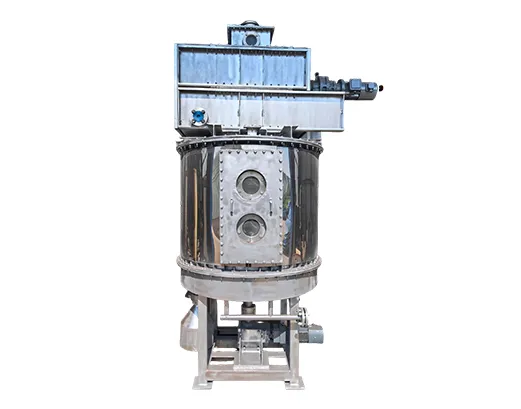
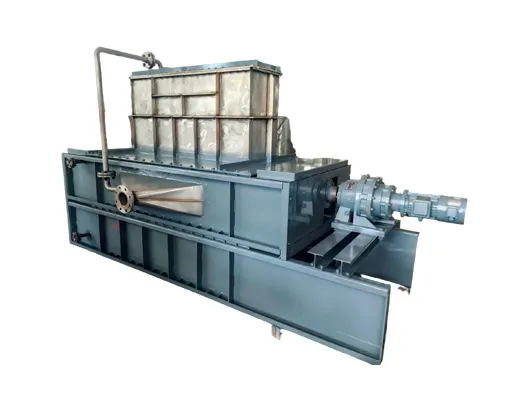
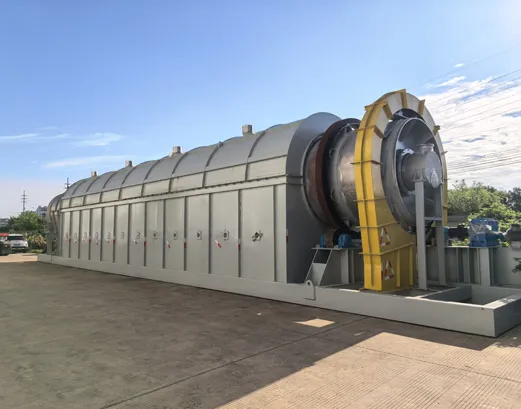
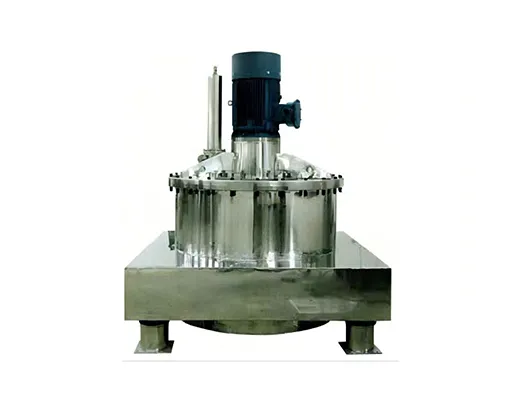
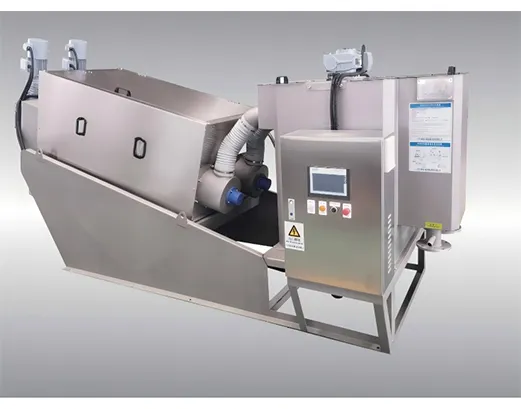
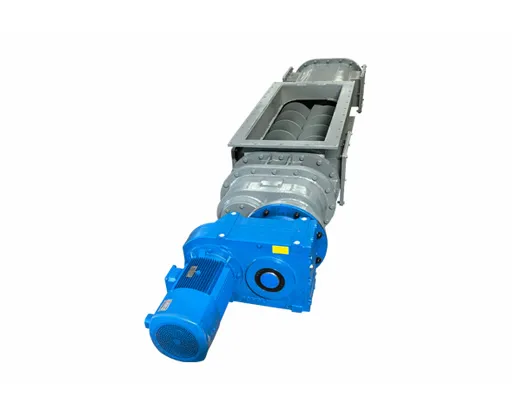
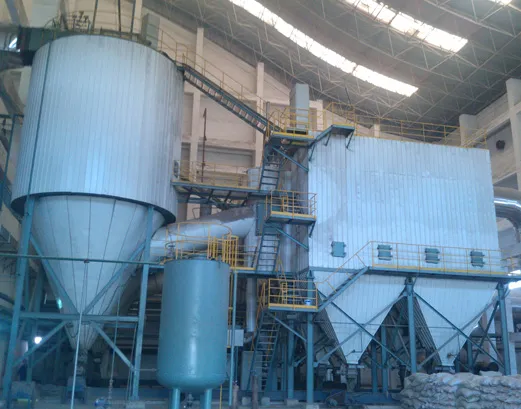
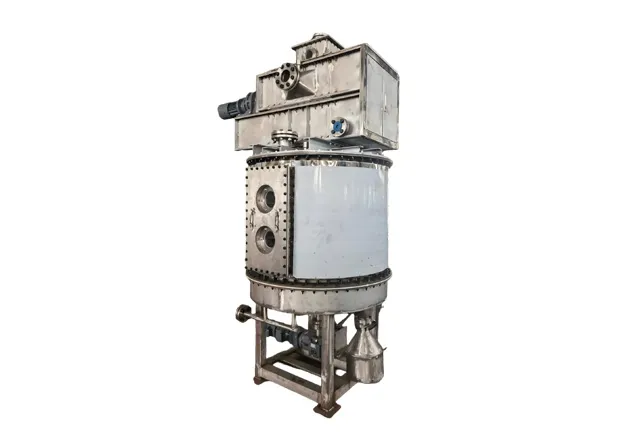
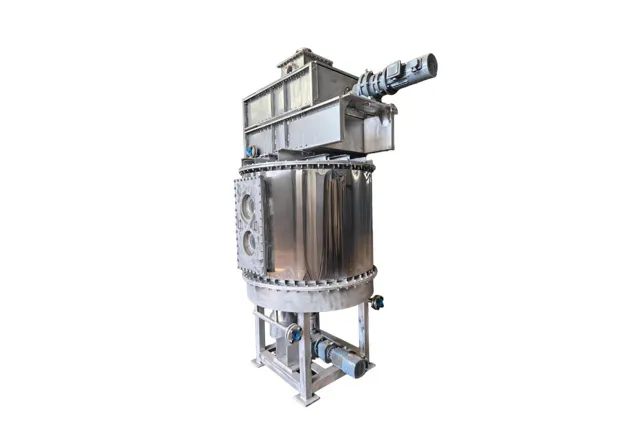
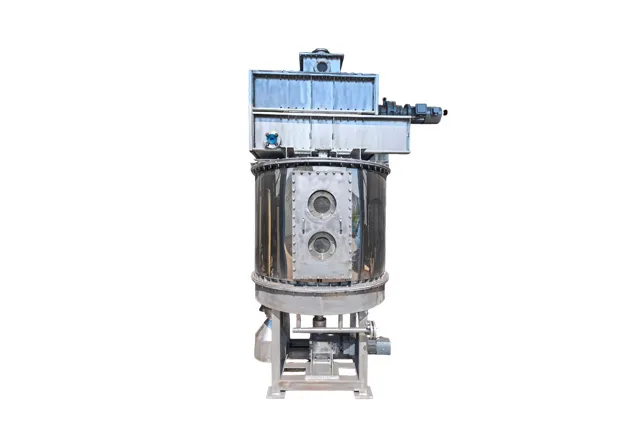
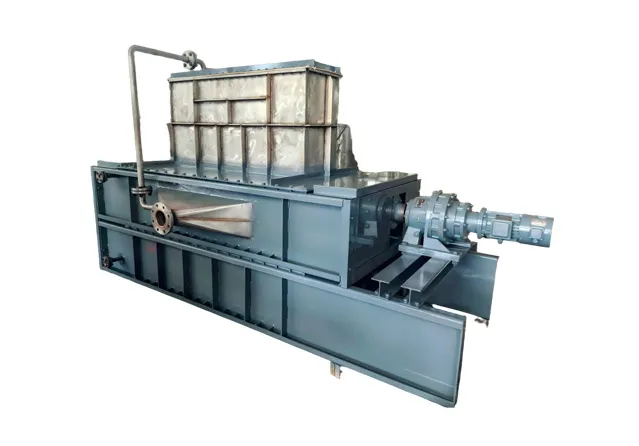
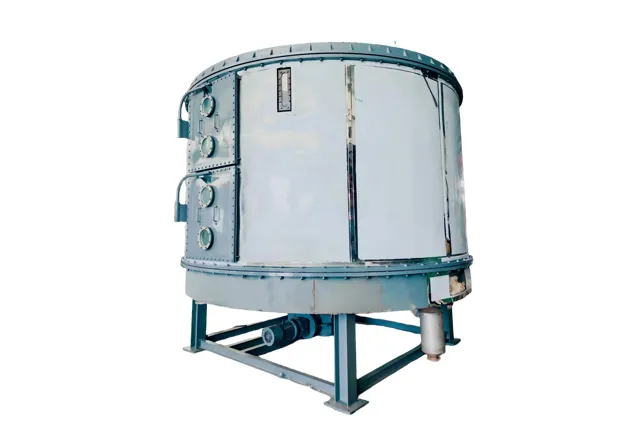
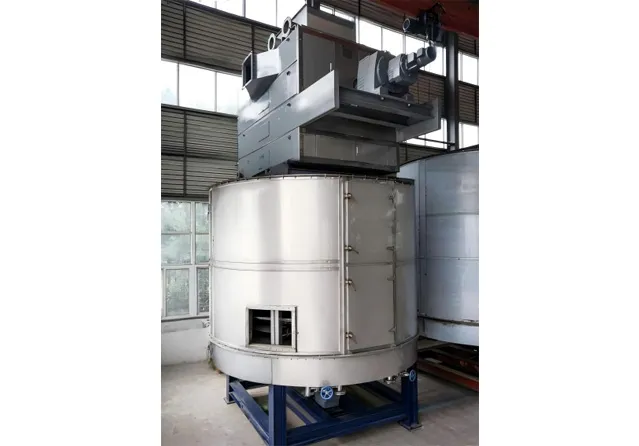
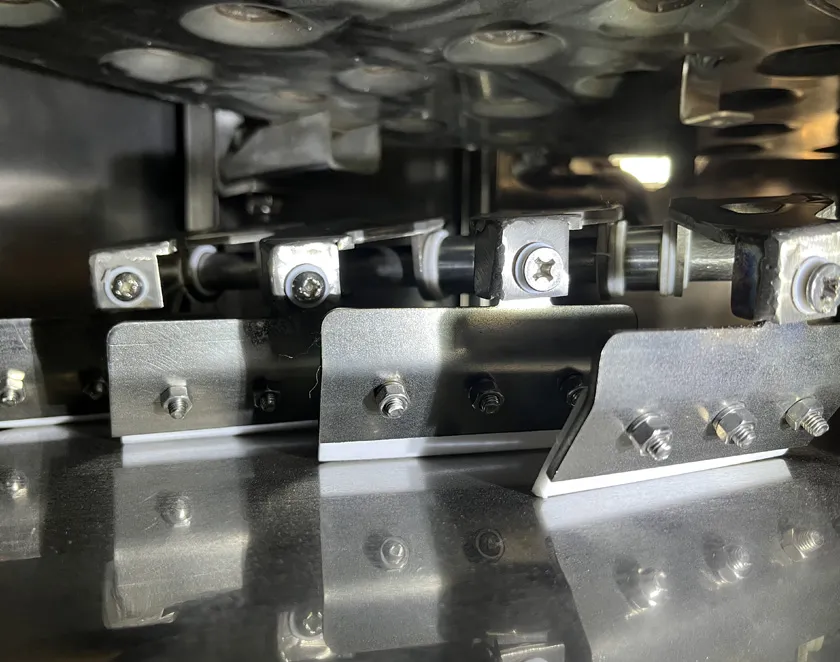
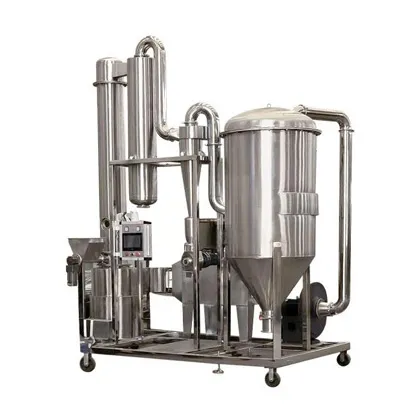
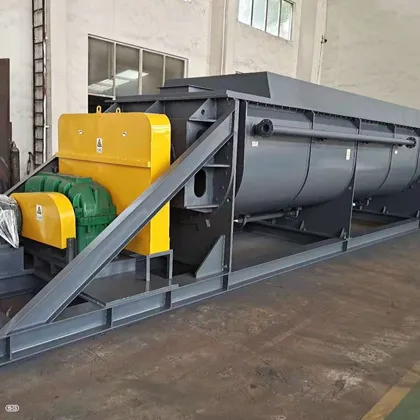
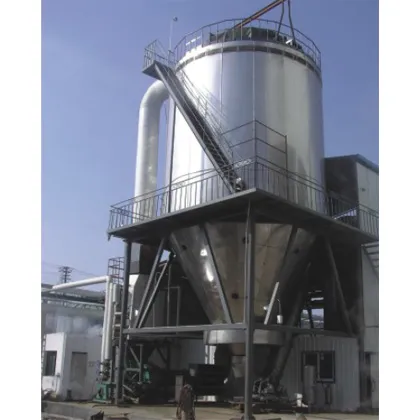
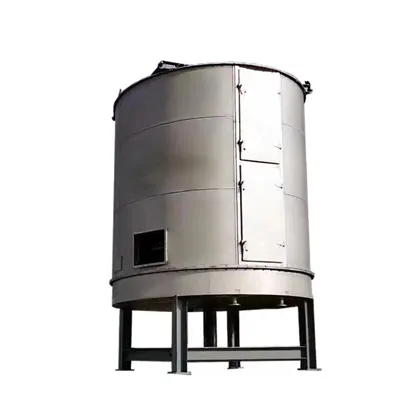
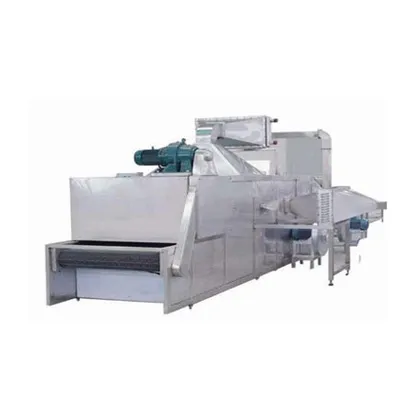
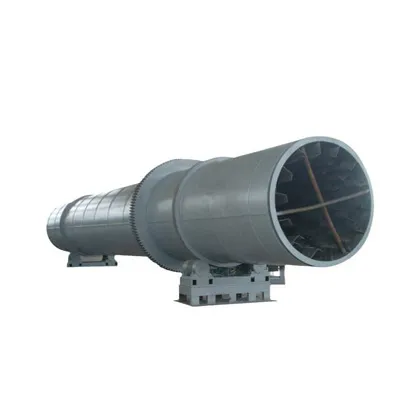
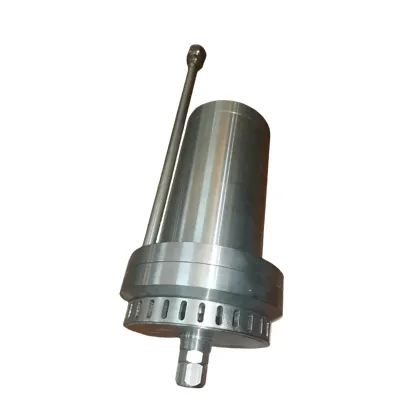
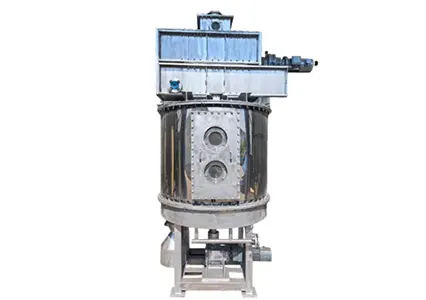
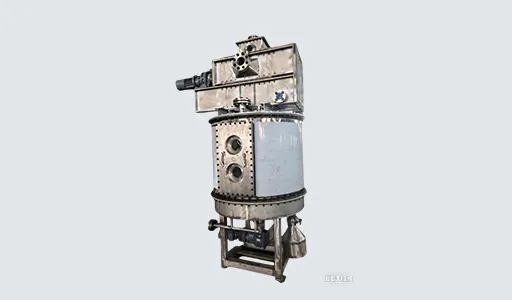
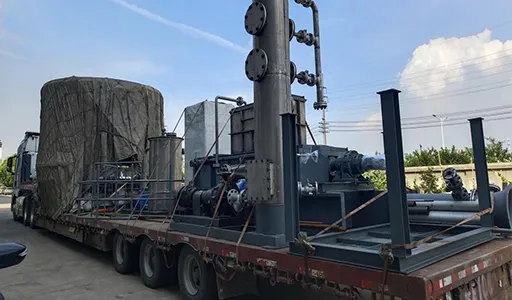
Thin Film Dryer system include two parts: granulator + vertical disc dryer.
Granulator is an innovation and another form of thin layer drying and hence it is thus named as it eventually becomes particles.
Disc dryer is an efficient conductive continuous drying equipment. Its unique structure and working principle determine that it has the characteristics of high thermal efficiency, low energy consumption, small footprint, simple configuration, convenient operation and control, and good operating environment. Widely applicable to drying operations in industries such as chemical, pharmaceutical, pesticide, food, feed, and agricultural and sideline product processing. Highly praised in practical applications across various industries. It can be divided into three types: atmospheric pressure, sealed, and vacuum.
Technical advantages:
Cell water (bound water) and siphon water all become surface water, and the heat consumption is 60% - 70% of that of similar equipment;
No weld lines on the movement surface to absolutely avoid leakage by worn welds;
Nearly zero wear with mud and sand automatically isolating the rake blade and sliding friction becoming rolling friction, which leads to even lower maintenance probability;
Low rate of corrosion, no scaling, self-cleaning and long service life;
No extrusion, rolling, kneading movement, unique advantages on dying of oil sludge (sticky materials), brings solutions to the difficulties of drying of special sticky material, ultra-high cellular water and material containing high protein, sugar and fat in the drying industry:
No viscous area, low power consumption, main drive power consumption of the granulator is 1 ~ 1.5kwh/t wet material;
Combined structure, single unit heat supply, flexible adjustment and no need of overhauling;
Final produce of "popcorn" particles to avoid combustion or explosion of dust;
"Popcorn" particles are more helpful for burning (baking), thermal cracking (desorption), and fertilizer production;
Multi-layer combination: numbers of layers may be increased on site after the system is put into operation to achieve increased capacity;
Modular assembly, simple structure, small maintenance space and easy maintenance;