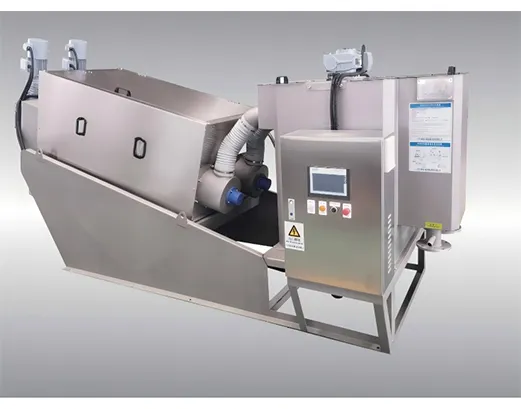
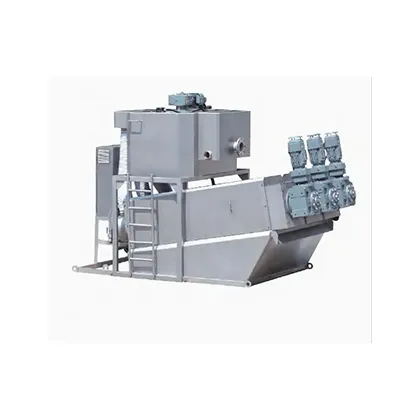
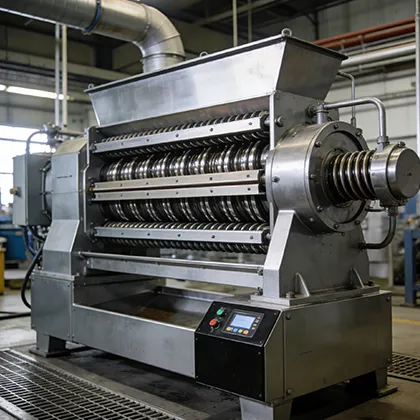
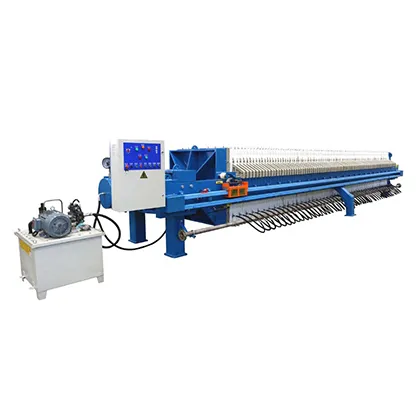
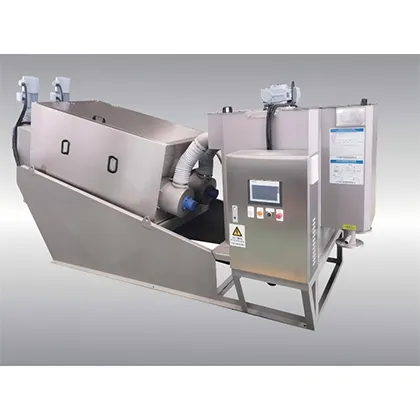
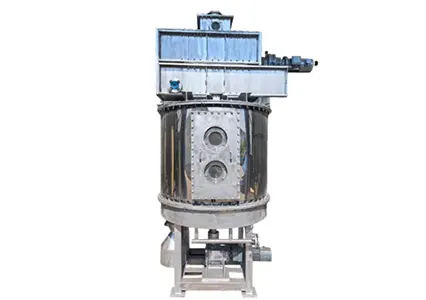
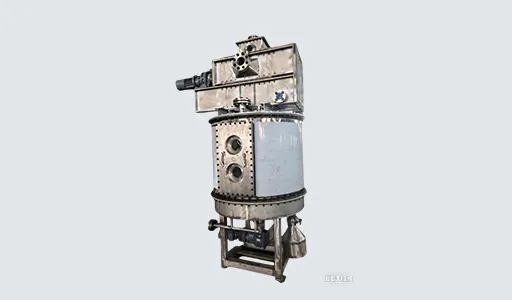
Utilizing a sludge dewatering machine delivers substantial operational and financial benefits. It dramatically reduces sludge volume and weight, slashing transportation and final disposal costs. The process enhances efficiency by producing a drier, more stable cake suitable for incineration, landfill, or agricultural reuse. It ensures reliable compliance with environmental regulations for solid content and disposal. Furthermore, modern dewatering systems offer automated operation, lower energy consumption, and reduced polymer (flocculant) usage. By minimizing manual handling and improving overall plant workflow, these machines provide a rapid return on investment through significant long-term cost savings and process optimization.
The working principle of sludge dewatering equipment is based on physical separation, with the core objective of overcoming the bonding force between water and solid particles.
The water in sludge mainly exists in forms such as free water and bound water. The equipment first uses chemical conditioning (e.g., adding flocculants) to neutralize the surface charge of particles, causing them to aggregate into larger, stronger flocs, thereby releasing some bound water and reducing separation difficulty.
Subsequently, one or more of the following mechanical forces are applied for dewatering:
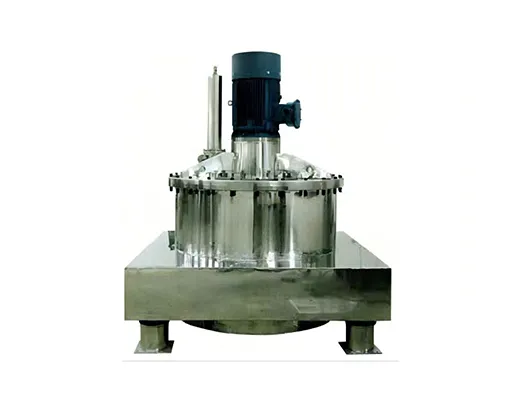
Centrifugal Force: Utilizes the density difference between solids and liquids for rapid separation inside a high-speed rotating drum.
Filtration Pressure: Forces water through a filter medium (e.g., belt filter press or plate and frame filter press) under pressure, while solids are retained to form a filter cake.
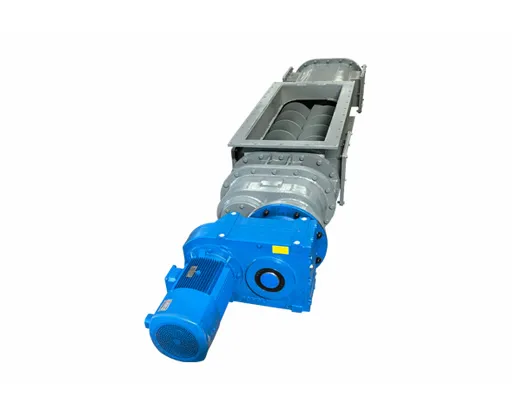
Screw Extrusion: Gradually squeezes out moisture through continuous shearing and compression by a conveying and compressing tapered screw.
Ultimately, these physical processes efficiently transform fluid sludge into a cake with significantly increased solid content, achieving volume reduction and stabilization.